


Bathroom Tiling Styles That Age Well
- qualityaussietiler
- 2 days ago
- 6 min read
A bathroom can look sharp on a showroom board and still feel wrong once it is in your home. That usually comes down to the tile choice. Bathroom tiling styles do more than set the look of the room. They affect how spacious it feels, how easy it is to clean, and whether the finish still looks right five or ten years from now.
For most homeowners, the best result is not the trendiest option. It is the style that suits the size of the room, the natural light, the fittings, and the level of upkeep you are willing to live with. A good tiling layout should feel balanced and practical from the day it is installed.
How bathroom tiling styles change the feel of a room
Tiles have a bigger impact than many people expect. The same bathroom can feel brighter, calmer, warmer or more cramped depending on the format, pattern and grout choice.
Large-format tiles often make a room feel cleaner and less busy because there are fewer grout lines. That can work especially well in smaller bathrooms where too much visual detail makes the space feel crowded. On the other hand, smaller tiles can add texture and character, especially in shower floors, feature walls or older homes where a more detailed finish suits the style of the property.
The direction of the tile matters as well. A horizontal stack can make a wall appear wider. A vertical layout can draw the eye upward and help with rooms that feel a bit low or closed in. These are simple decisions on paper, but they change the finished result more than people realise.
The most popular bathroom tiling styles
There is no single best option for every bathroom. It depends on the look you want, the structure of the room, and how much maintenance you are comfortable with.
Large-format tiles
Large-format porcelain tiles are one of the most requested choices for modern bathrooms, and for good reason. They give a clean, streamlined finish and can make the room feel more open. Fewer grout joints also mean less visual interruption and generally easier cleaning.
That said, they need careful installation. Larger tiles show uneven walls and floors more easily, so preparation matters. In wet areas, they also need the right falls and finishing detail to avoid drainage issues. When done properly, they create a very polished result.
Subway tiles
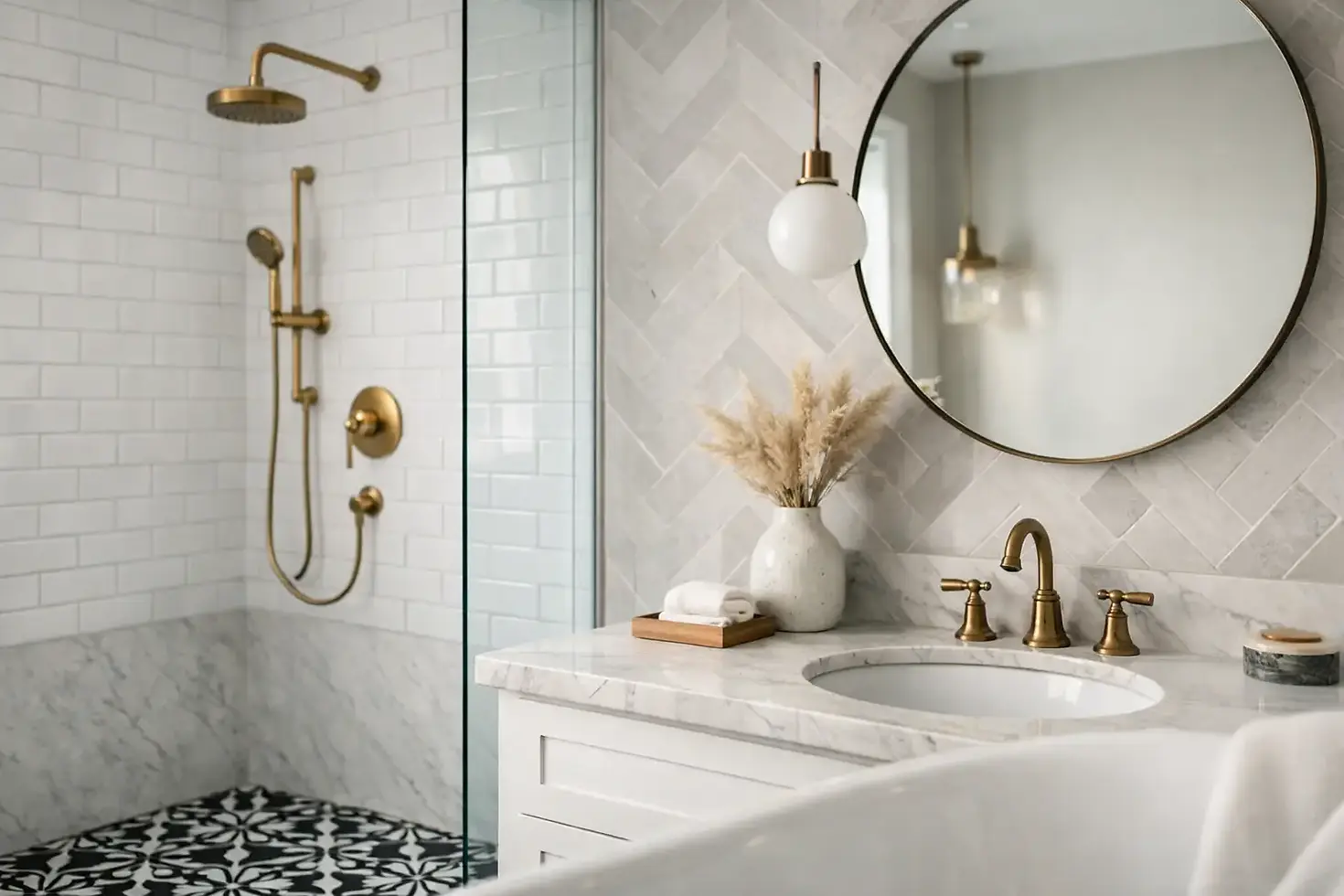
Subway tiles have been popular for years because they are simple, versatile and easy to work into different home styles. They can suit a classic bathroom, a Hamptons-inspired look or a more modern fit-out depending on the colour, grout and layout.
The trade-off is grout. Smaller tiles mean more joints, and that means more areas to clean over time. If you like the look but want less upkeep, it is worth being selective about where you use them. A single feature wall or shower niche can give the same character without covering the whole room.
Stone-look tiles
Stone-look porcelain is a practical way to get a natural appearance without the higher maintenance of some real stone products. It works well in bathrooms where you want warmth and texture rather than a glossy or highly polished finish.
These tiles are especially effective in neutral colour schemes. Soft greys, warm beige tones and off-whites can give the room a settled, high-end feel without trying too hard. The key is choosing a finish that still has enough slip resistance for the floor.
Mosaic tiles
Mosaics are often used on shower floors, niches and feature sections because they add detail and provide more grip underfoot. They can be a smart practical choice in certain spots, particularly where falls are tighter and smaller pieces work better.
Used across an entire bathroom, though, mosaics can become visually busy. They also create a lot of grout lines. In most homes, they work best as an accent rather than the main event.
Patterned and decorative tiles
Patterned tiles can bring personality into a bathroom, especially in powder rooms or smaller spaces where you want a bit more interest. They work well on floors or as a feature wall behind a vanity.
The main thing to watch is balance. Strong patterns can date faster than plain tiles, and they can limit future changes to tapware, paint and fittings. If you are planning to stay in the home long term and genuinely like the look, they can be a great choice. If resale flexibility matters, it is often smarter to keep the main tiling more neutral.
Choosing bathroom tiling styles that suit your home
The best bathrooms feel consistent with the rest of the house. A very sleek, ultra-minimal tile selection can look out of place in a character home, while highly decorative patterns may not suit a newer build with a cleaner architectural finish.
This is where experience matters. It is not just about choosing a tile sample you like in isolation. It is about how that sample works with the vanity, lighting, screen, trim colours and floor waste positions. A tile can look excellent in a showroom and still be the wrong fit once it is scaled across a full bathroom.
In Brisbane homes, practical factors come into it as well. Light levels, ventilation and the way bathrooms are used every day all affect what style makes sense. A family bathroom needs a different approach from an ensuite that is mainly used by two adults.
Floor tiles and wall tiles should work together
One of the most common mistakes in bathroom design is treating the wall tile and floor tile as two separate decisions. They need to complement each other in colour, finish and scale.
If both are heavily patterned or highly textured, the room can feel cluttered. If both are too plain without any contrast, the bathroom can end up looking flat. Usually the strongest result comes from letting one element lead and the other support it.
For example, a stone-look floor tile with a simple wall tile often works well because it gives some texture underfoot while keeping the walls clean and bright. Likewise, a feature wall in a stacked or vertical layout can pair well with a more understated floor.
Grout colour matters more than people expect
Grout is often treated as an afterthought, but it changes the whole look of the tiling. Matching grout gives a softer, more continuous finish. Contrasting grout highlights the tile shape and pattern more strongly.
Neither is right or wrong. It depends on the effect you want. Just keep in mind that very light grout can show staining more easily in some areas, while very dark grout can make soap residue more noticeable. A mid-tone grout often gives a good balance between appearance and practicality.
Trends can help, but they should not drive the whole job
There is nothing wrong with taking inspiration from current trends. Textured neutrals, warm earthy tones and feature niches are all popular for good reason. They can look excellent when they are used with restraint.
The problem starts when a bathroom is built entirely around a short-term trend. Bathrooms are not like cushions or paint colours that are easy to swap out. Retiling is a proper renovation job. If the style feels tired in a few years, changing it is expensive and disruptive.
A safer approach is to keep the main tiled areas timeless and use trend-led details in smaller ways. That might mean a feature strip, a niche tile, or a particular shape on one wall rather than across the whole room.
Good style still depends on good installation
Even the best tile selection will not look right if the work behind it is poor. Uneven lines, awkward cuts, lipping, rushed grout work and bad waterproofing can ruin the finish and create bigger problems later.
That is why choosing bathroom tiling styles is only part of the job. The way the tiles are set out, the way the corners finish, and the care taken with the substrate and waterproofing all matter just as much. In wet areas, the look and the technical side have to work together.
An experienced tiler will often guide you away from choices that look good in theory but create avoidable problems on site. That might mean adjusting a tile size to improve falls, changing a layout to reduce small cuts, or recommending a finish that will wear better in daily use. That sort of advice saves headaches later.
What tends to age best
If your goal is a bathroom that still looks right years from now, simple usually wins. Large-format tiles in natural tones, balanced layouts, practical floor finishes and restrained feature details tend to hold up well.
That does not mean your bathroom has to be plain. It just means the styling should feel considered rather than forced. A bathroom should be easy to live with, easy to maintain and solidly built behind the surface.
If you are weighing up different bathroom tiling styles, the smartest choice is usually the one that suits your home, not just the latest photo you have saved. A good bathroom should still feel right long after the renovation dust is gone.


Comments