


Waterproofing Before Tiling a Bathroom: What Matters
A bathroom can look beautifully finished on the day the last tile is laid, yet still have a serious problem concealed behind the walls or beneath the floor. That is why waterproofing before tiling bathroom surfaces is one of the most critical parts of any renovation. Tiles and grout are a finish, not a waterproof barrier. The protection your home relies on sits underneath them.
For Brisbane homeowners, getting this stage right means fewer worries about leaks, mould, swollen skirting boards, damaged framing and expensive repairs down the track. It also means the tiling work has a stable, properly prepared surface to be installed over.
Why waterproofing comes before bathroom tiling
Water naturally finds its way into small openings. Shower recesses, wall-to-floor junctions, pipe penetrations and the area around a bath are all exposed to regular moisture. Even when tiles are installed carefully, grout can absorb water and silicone seals eventually need maintenance. Without a continuous waterproofing system behind the finish, moisture can travel into the substrate and surrounding building materials.
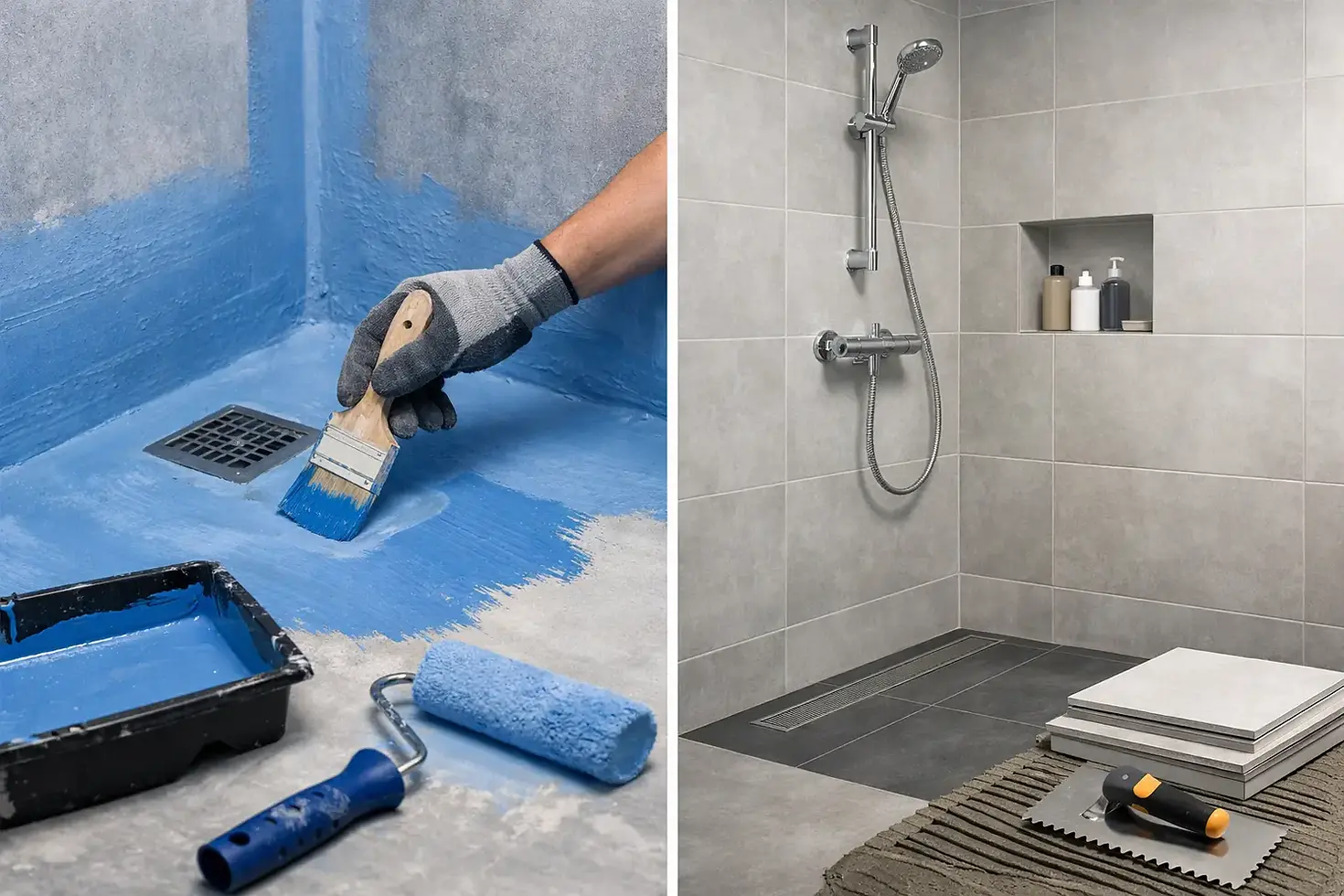
A proper membrane is designed to manage that risk. It creates a protective layer beneath the tiles and directs water in wet areas towards the drainage point rather than into the structure of the home.
This is particularly important in a shower. The shower floor, hob or entry, wall junctions and plumbing penetrations all need careful treatment. A neat tile layout cannot compensate for missed waterproofing details below it.
What a properly prepared wet area looks like
Good waterproofing is not simply a quick coat of membrane over the floor. It starts with the right substrate and follows a planned system from preparation through to tiling.
The substrate is checked first
Before any membrane is applied, the floor and walls need to be sound, clean and dry. Dust, loose material, old adhesive, gaps and movement can affect how well a membrane bonds. If the substrate is uneven or damaged, it may need repair or levelling before waterproofing begins.
In a renovation, this can uncover issues that were not obvious when the old tiles were in place. Water damage around a shower, deteriorated wall linings or poorly formed floor falls should be addressed before covering the area again. Skipping those repairs may save time initially, but it creates a weak base for the new bathroom.
Junctions and penetrations receive extra attention
The highest-risk points are rarely the middle of a wall or floor. They are the changes of direction and openings where materials meet. This includes wall-to-floor junctions, internal corners, hob edges, drains and pipes coming through walls or floors.
These areas are generally reinforced as part of the waterproofing system. Tapes, bond breakers, collars and compatible sealants allow for slight movement while maintaining a continuous barrier. The exact method depends on the membrane system and the bathroom design, but the principle is the same: there should be no weak path for water to get behind the tiles.
The membrane is applied to the required areas
The extent of waterproofing depends on whether an area is classified as a wet area and how it will be used. A shower requires more comprehensive treatment than a bathroom floor outside the shower zone, while a bath with a shower above it needs careful wall protection as well.
Membranes are commonly liquid-applied, although sheet systems are also used in suitable applications. What matters is that the chosen product is compatible with the substrate, installed at the specified coverage and thickness, and allowed to cure properly. Applying a membrane too thinly or tiling over it before curing can compromise the system.
Falls must support drainage
Waterproofing and drainage work together. The bathroom floor, particularly in shower areas, needs appropriate falls so water moves towards the waste rather than pooling in corners or against walls. A membrane can prevent water from entering the structure, but it cannot fix a floor that constantly holds surface water.
This is one reason bathroom tiling should be planned before work begins. Tile size, drain location, shower design and floor levels all affect how easily correct falls can be achieved. Large-format tiles can look excellent, for example, but smaller tiles are often more practical on a shower floor where several cuts and falls meet at the drain.
Waterproofing before tiling a bathroom is not a shortcut stage
Homeowners sometimes ask whether tiles can be laid over an existing surface or whether the grout can be sealed instead of waterproofing underneath. The answer depends on the condition of the existing bathroom and the scope of the work, but surface sealers are not a substitute for a waterproof membrane.
Likewise, tiling over old tiles may be suitable for some low-risk areas where the existing finish is sound and levels allow it. It is not an automatic solution for a shower or a bathroom with signs of movement, leaking, loose tiles or moisture damage. Adding a new tile layer over a failed substrate only hides the issue for a while.
A reliable trade professional will assess the room rather than offering a one-size-fits-all answer. In some renovations, removing everything back to the substrate is the sensible approach. In others, a carefully scoped repair may be appropriate. The right decision comes down to the existing construction, moisture exposure and the intended finish.
Common mistakes that lead to bathroom leaks
The most costly waterproofing failures often begin with small details being overlooked. Rushed preparation, incompatible products and poor sequencing can all create problems that are not visible once the tiles are installed.
Watch for these warning signs during planning or renovation work:
membrane applied over dusty, damp or unstable surfaces
no reinforcement at corners, joins, drains or pipe penetrations
inadequate curing time before adhesive and tiles are installed
poor floor falls that leave water sitting away from the drain
silicone being treated as the primary waterproofing system
shower walls or floor areas not waterproofed to the required extent
tiling work starting before the waterproofing stage has been checked.
Another common issue is changing the bathroom layout after waterproofing has started. Moving a drain, adding a niche, altering a shower screen position or changing plumbing penetrations can affect the waterproofed area. These changes need to be considered and properly detailed before tiling proceeds.
Choosing tile finishes after waterproofing
Once the waterproofing has cured and the substrate is ready, the tile selection can be put into practice. This is where appearance and function need to meet.
For shower floors, slip resistance, tile size and grout joint layout deserve more attention than colour alone. A tile that suits a large bathroom floor may not suit a compact shower base. For walls, larger tiles can create a clean, modern look with fewer grout joints, but they require careful setting out to avoid awkward cuts around windows, niches and fixtures.
Natural stone can also be a great choice, though it needs product-specific preparation and sealing. Stone is not automatically waterproof simply because it is dense or expensive. The waterproofing membrane still does the structural protection, while the stone finish needs suitable maintenance to keep it looking its best.
A detail-focused tiler will plan tile lines around focal points such as a vanity, shower niche, drain and feature wall. This planning is best done before adhesive is mixed, not halfway through installation. It helps deliver a balanced finish and avoids unnecessary narrow cuts at the edges of the room.
What to ask before bathroom tiling begins
Clear communication protects both the homeowner and the trades involved. Before work starts, ask how the waterproofing stage will be prepared, what system is being used and when tiling can safely begin. You should also confirm how falls, drains, shower hobs or walk-in entries and plumbing penetrations will be handled.
For work requiring licensed waterproofing, ensure the appropriate licensed professional is engaged and that the work is completed in line with applicable requirements. The National Construction Code and relevant Australian Standards set expectations for wet-area performance, but practical workmanship is what brings those requirements to life on site.
At Quality Aussie Tilers, the approach is to treat waterproofing as part of the foundation for a lasting tiled finish, not as an afterthought between demolition and tile installation. Careful preparation, clean work practices and attention to junctions make a genuine difference to the finished bathroom.
A bathroom renovation involves plenty of visible choices, from tile colour to tapware and lighting. Give the same care to the layer you will never see again. When waterproofing is done properly before tiling, you can enjoy the finished room with far greater confidence for years to come.


Comments