


What Is Best Bathroom Tile for Your Home?
- qualityaussietiler
- 12 hours ago
- 6 min read
If you have stood in a tile showroom staring at fifty good-looking options that all claim to be practical, you are not alone. Homeowners often ask what is best bathroom tile, but the honest answer is not a single product or style. The best bathroom tile is the one that suits the room, handles moisture properly, gives you the right level of slip resistance, and still looks right years from now.
Bathrooms work harder than most rooms in the house. They deal with water, steam, cleaning products, foot traffic and daily wear. That means your tile choice needs to do more than look good on installation day. It needs to perform well on floors and walls, be suited to wet areas, and fit the level of maintenance you are happy to take on.
What is best bathroom tile? It depends on where it goes
The first thing to get right is the location. A bathroom floor has very different demands from a shower wall or vanity splashback. Floor tiles need to be durable, safe underfoot and appropriate for wet conditions. Wall tiles can be smoother and more decorative because they are not taking the same impact or foot traffic.
This is where many renovation decisions go off track. A tile that looks perfect on a display wall may not be the right choice for a shower base or bathroom floor. In practical terms, there is no one-size-fits-all answer. The best result usually comes from choosing tiles by function first, then appearance.
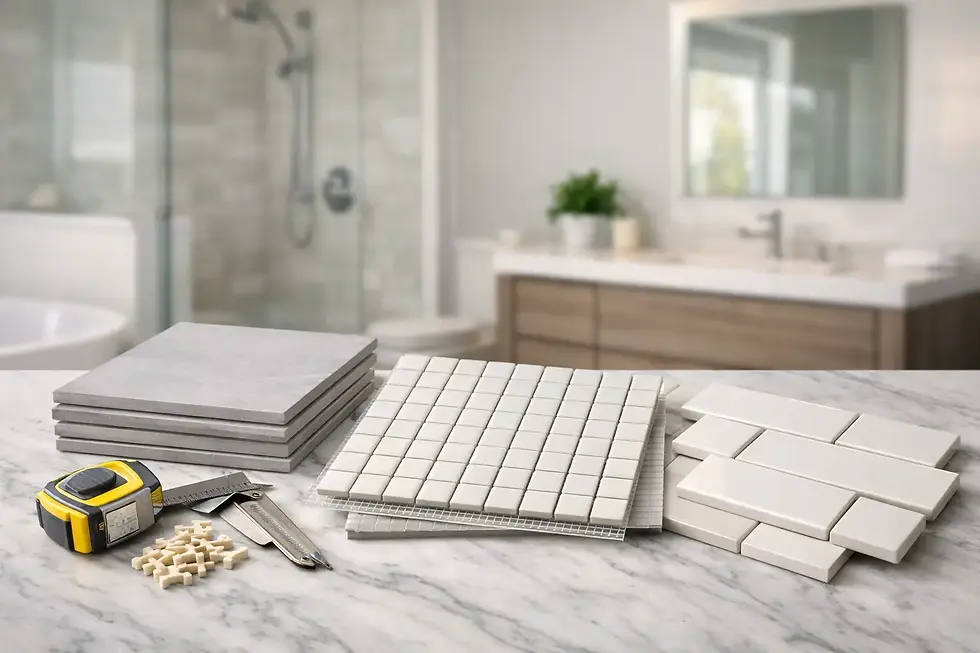
For most households, porcelain is the strongest all-rounder. Ceramic can also work well, especially on walls. Natural stone has real appeal, but it needs a clear understanding of maintenance and sealing. Mosaic tiles have their place too, especially where extra grip or detail is needed, but they are not always the easiest option to keep clean.
Porcelain is often the safest all-round choice
If a homeowner asks for one material that covers the most boxes, porcelain is usually the leading option. It is dense, hard-wearing and less porous than standard ceramic, which makes it a strong fit for bathrooms. It handles moisture well, suits both floors and walls, and comes in a wide range of finishes.
That range matters. You can get porcelain tiles that look like stone, concrete, terrazzo or timber, without taking on the same level of upkeep as the natural material. For busy family bathrooms, ensuites and investment properties, that balance of durability and appearance makes a lot of sense.
Porcelain is also a sensible choice if you want a bathroom that still feels current in ten years. A quality porcelain tile in a neutral tone tends to age better than trend-driven patterns that can quickly date a space. That does not mean plain or boring. It means choosing with the long term in mind.
Ceramic tile still has a place
Ceramic tiles are often a good option for bathroom walls. They are generally more budget-friendly than porcelain, come in plenty of styles, and can create a clean, polished finish. If the tile is only going on walls, ceramic may be all you need.
Where people need to be careful is assuming wall-grade ceramic will suit floors as well. Some ceramic tiles are fine for bathroom floors, but not all. The tile rating, finish and intended use matter. This is one of those areas where getting proper advice before installation saves headaches later.
For a feature wall, niche or splashback, ceramic can be a smart way to bring in texture or gloss without overcomplicating the rest of the room. It is a practical choice when used in the right place.
Natural stone looks premium but needs more care
There is no doubt natural stone can give a bathroom a premium finish. Marble, travertine, limestone and slate all have character that manufactured tiles try to copy. If you want a bathroom with a more organic, high-end feel, stone can be very effective.
The trade-off is maintenance. Natural stone is porous to varying degrees, often needs sealing, and can be more sensitive to certain cleaning products. Some stones also mark or etch more easily than people expect. That does not make stone a bad choice. It just means it is best for homeowners who understand what is involved and are happy to look after it properly.
In bathrooms, the finish matters as much as the stone itself. A highly polished stone floor may look impressive, but it is not always the safest option in a wet area. Honed or textured finishes are often more practical.
The best bathroom floor tile is not always the glossiest one
When people think about bathroom design, they often focus on colour and pattern first. On floors, slip resistance should be near the top of the list. A glossy tile might bounce light around nicely, but if it becomes slippery when wet, it is not doing the job.
This is especially relevant in family homes, bathrooms used by older occupants, and any shower area where water regularly reaches the floor. A tile with appropriate slip resistance helps create a safer room without giving up on appearance. There are many matte and lightly textured options now that look sharp and perform well.
Tile size also affects how a floor works. Large format tiles can make a bathroom look more spacious and reduce grout lines, which many homeowners like. But in smaller wet areas, such as a shower floor, smaller tiles or mosaics are often the better option because they follow the fall more effectively and can offer better grip underfoot.
What is best bathroom tile for walls and shower areas?
For walls, the answer is usually broader. You can use porcelain, ceramic, natural stone or even feature mosaics depending on the look you want and the room design. Because walls are not exposed to the same wear as floors, you have more freedom with finish and texture.
Shower areas need more thought. The tile itself matters, but so does the system behind it. A good-looking tile will not make up for poor substrate preparation or failed waterproofing. In any wet area, proper installation is just as important as material selection.
That is why homeowners should look at the full picture. If you are choosing bathroom tile, think beyond the display board. Consider the waterproofing, the falls, the grout, the sealants and the way the room is used every day. The best tile can only perform properly when it is installed with care.
Style matters, but not at the expense of practicality
A bathroom renovation is part function, part finish. You want it to feel right when you walk in. Colour, shape, pattern and layout all play a role. Light neutral tiles remain popular because they help bathrooms feel open, clean and easy to style. Charcoal, concrete-look and stone-look finishes also work well when you want something more contemporary.
That said, the smartest bathrooms usually avoid chasing every short-term trend. A heavily patterned tile or very bold feature can work, but it needs to be considered carefully. What looks exciting now may feel dated faster than a simpler palette with quality detailing.
If resale matters, this is worth keeping in mind. Most buyers respond well to bathrooms that feel clean, timeless and well finished. Good tile selection supports that. So does neat setting out, straight lines, balanced cuts and tidy grout work. Craftsmanship is what turns an ordinary tile into a bathroom that feels properly finished.
Grout, maintenance and the reality of daily use
Tile choice is only part of the maintenance story. Grout colour and grout width also affect how your bathroom looks over time. Very light grout can look crisp on day one, but it may show staining more quickly in high-use areas. Very dark grout can create contrast, but it can also highlight soap residue in some bathrooms.
The best approach is usually practical rather than extreme. Choose a grout colour that suits the tile and the level of upkeep you want. Think about who is using the bathroom too. A rarely used guest ensuite can carry more delicate design choices than the main family bathroom used every morning and night.
Easy cleaning often comes down to sensible decisions. Matte porcelain, moderate grout lines and a straightforward layout can be easier to live with than highly textured tiles with lots of narrow joints. There is nothing wrong with statement finishes, but they should match the way you actually use the space.
So, what should most homeowners choose?
For most Brisbane homes, the best bathroom tile is a quality porcelain tile on the floor, paired with porcelain or ceramic on the walls. That combination gives you durability, moisture resistance, design flexibility and a cleaner maintenance profile than many alternatives. If you want a premium natural look, stone-look porcelain often gives you the appearance without the same level of upkeep.
If you are set on natural stone, make sure you are comfortable with sealing and ongoing care. If you love mosaics, use them where they make functional sense, not just because they look good in a showroom. And if you are comparing tile samples, always ask where each one is actually rated to be used.
The best bathrooms are not built on guesswork. They come from good materials, the right product in the right place, and careful installation from someone who understands wet areas properly. If you start there, you are far more likely to end up with a bathroom that looks sharp, performs well and still feels like money well spent years later.
A good tile choice should make life easier, not just impress for a week. When in doubt, lean towards durability, slip resistance and a finish you will still be happy to see every morning.


Comments