


12 Bathroom Tiling Ideas That Still Last
- qualityaussietiler
- 6 days ago
- 6 min read
A bathroom can look expensive on paper and still feel flat once the tiles go in. That usually comes down to choices that looked good in a showroom but did not suit the room, the light or the way the space is used every day. The best bathroom tiling ideas are the ones that balance appearance with practicality, especially in wet areas where layout, slip resistance and waterproofing all matter.
If you are planning a renovation, it helps to think beyond tile colour alone. Size, finish, grout, pattern and where each tile is used all change the final result. A good tile choice should suit the room now and still feel right in five or ten years.
Bathroom tiling ideas that work in real homes
A lot of bathrooms do not need bold features to look well finished. They need a clear plan. In many cases, the strongest result comes from combining one main tile with one supporting feature rather than trying to fit too many looks into a small space.
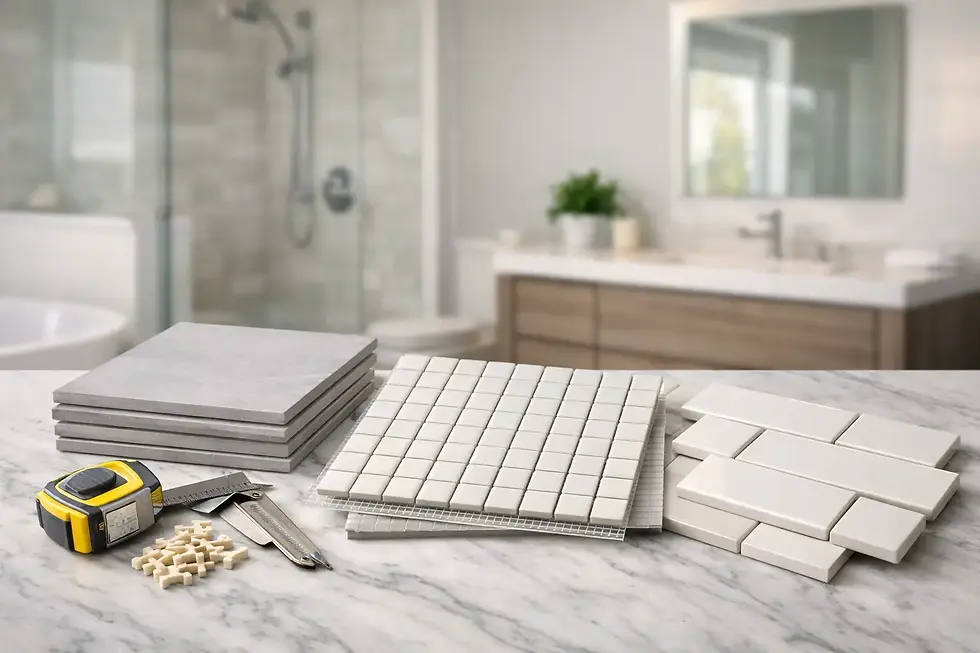
Large-format tiles are one of the most reliable options for walls and floors. They create a cleaner look with fewer grout lines, which can help a bathroom feel more open. They are especially useful in compact ensuites or narrow bathrooms where too much visual detail can make the room feel busy. The trade-off is that larger tiles need careful set-out and a flatter substrate to achieve a neat finish.
Subway tiles remain popular because they are simple, versatile and easy to pair with different fittings. Laid in a standard brick pattern, they suit classic bathrooms. Set vertically or in a stacked layout, they feel more modern. The tile itself is familiar, but the layout changes the whole mood of the room.
Stone-look porcelain is another strong option if you want a softer, more natural finish without the upkeep that can come with real stone. It works well in neutral bathrooms and pairs nicely with timber vanities, brushed metal tapware and warm lighting. For many homeowners, it gives the look they want with less maintenance risk.
Feature niches can do more than solve storage. Tiling a shower niche in a contrasting format, such as mosaic or finger tile, adds detail without taking over the space. This works best when the feature is tied back to the rest of the room through tone or texture. A niche should look intentional, not like a leftover idea added at the end.
Floor-to-ceiling wall tiling is often worth considering, especially in smaller bathrooms. It gives the room a more finished feel and helps protect walls in areas exposed to moisture. It can also make cleaning easier over time. In homes where durability matters more than short-term savings, full-height tiling usually makes sense.
Choosing bathroom tiling ideas by style
If you prefer a modern bathroom, cleaner lines generally work better than high contrast patterns. Large grey, beige or off-white tiles with rectified edges can create a sharp, tidy finish. Pair that with a simple stacked wall tile or a matte floor tile and the room feels current without chasing trends too hard.
For a more classic look, softer whites, light greys and gentle stone patterns are often the safer choice. Subway tiles, smaller format floors and traditional layouts tend to age well. Brass or brushed nickel fittings can lift the overall finish, but the tiling should still do the heavy lifting.
If you want something warmer and more relaxed, earthy tones are becoming more common. Sand, taupe, warm grey and clay-inspired colours can make a bathroom feel less stark. These tones suit homes that already use warmer finishes elsewhere, so the bathroom feels connected to the rest of the house rather than treated as a separate design experiment.
The main thing is consistency. Good bathrooms usually have one clear direction. When wall tiles, floor tiles, grout colour and trim all pull in different directions, even quality materials can look disjointed.
Tile size, layout and grout make a bigger difference than most people expect
Two bathrooms can use the same tile and end up looking completely different depending on the set-out. That is why layout matters just as much as tile selection.
Vertical stack patterns can make a room feel taller. Horizontal layouts can widen the look of a narrow wall. Herringbone adds movement and detail, but it is best used selectively. In a full bathroom, too much pattern can feel crowded. On a splashback wall or inside a niche, it usually has more impact.
Grout colour also deserves more thought than it gets. Matching grout creates a more seamless finish and lets the tile itself stand out less. Contrasting grout highlights the tile shape and pattern, which can be effective with subway tiles or mosaics but can also draw attention to every joint. In a family bathroom, where easy care matters, a mid-tone grout often performs better than bright white.
Joint spacing changes the final look too. Tighter joints can appear more refined, but only if the substrate and tile quality allow for it. This is where workmanship counts. A neat finish depends on proper preparation, accurate levelling and a set-out that avoids awkward cuts in obvious places.
Practical bathroom tiling ideas for floors and wet areas
A tile that looks great on a display board is not always right for a bathroom floor. Slip resistance matters, especially in homes with kids, older family members or bathrooms that see heavy daily use. Matte and structured finishes are often the better choice underfoot than highly polished surfaces.
Smaller floor tiles can be useful in shower areas because they allow better falls to the waste and often provide more grip due to extra grout lines. That is one reason mosaics are still common on shower floors. They are practical, not just decorative.
For the main bathroom floor, larger tiles can still work well if the room has been prepared properly and the drainage has been planned carefully. The key is getting the falls right and making sure the tile choice suits the area. There is no single best size for every bathroom. It depends on the room dimensions, the waste position and the finish you want.
Waterproofing should never be treated as a background detail. In wet areas, the tile finish only performs as well as the preparation underneath it. A bathroom may look excellent on the surface, but if waterproofing is rushed or non-compliant, the real cost shows up later. That is why experienced installation matters just as much as the tile selection itself.
What to avoid when planning bathroom tiling ideas
Trying to include too many feature tiles is a common mistake. A bathroom is usually not large enough to carry three or four competing statements. One hero element is often enough.
Another issue is choosing tiles purely by trend. Very bold shapes, colours or patterns can date quickly. That does not mean you need to play it safe with everything, but it helps to put the stronger design choices in places that are easier to update later, such as paint, mirrors or tapware.
Poor proportion is another one. Tiny tiles across every wall in a large bathroom can feel busy. Oversized tiles in a room with lots of corners and cut-outs can create awkward waste and too many cuts. The best result usually comes from selecting a format that suits the actual room, not just the sample board.
It is also worth thinking about maintenance early. Textured tiles can add interest, but some are harder to clean. Very light grout can look crisp at handover and then demand more upkeep than expected. A practical choice is often the better long-term choice, especially in the main family bathroom.
Making the final selection with confidence
If you are narrowing down options, start with the floor tile first. It has the biggest practical role and usually sets the tone for the room. From there, choose wall tiles that support it rather than compete with it.
Take samples into the bathroom if you can. Natural light, artificial light and room size all change how a tile reads. What looks warm in a showroom may look grey at home. What seems subtle on a large display may dominate in a smaller ensuite.
It also helps to think in complete surfaces rather than individual products. The best bathrooms are not built around a single nice tile. They are built around a combination that works together - floor tile, wall tile, grout, trim, niche detail and fittings all considered as one finish.
For homeowners who want the job done properly, good advice early can save money and frustration later. An experienced tiler will usually spot issues with layout, tile suitability and finish before they become expensive problems on site. That practical input matters just as much as design inspiration.
Bathroom tile choices do not need to be complicated, but they do need to be deliberate. If the room feels balanced, the materials suit the way you live, and the installation is carried out with care, the finished space will hold up well long after the renovation dust settles.


Comments